
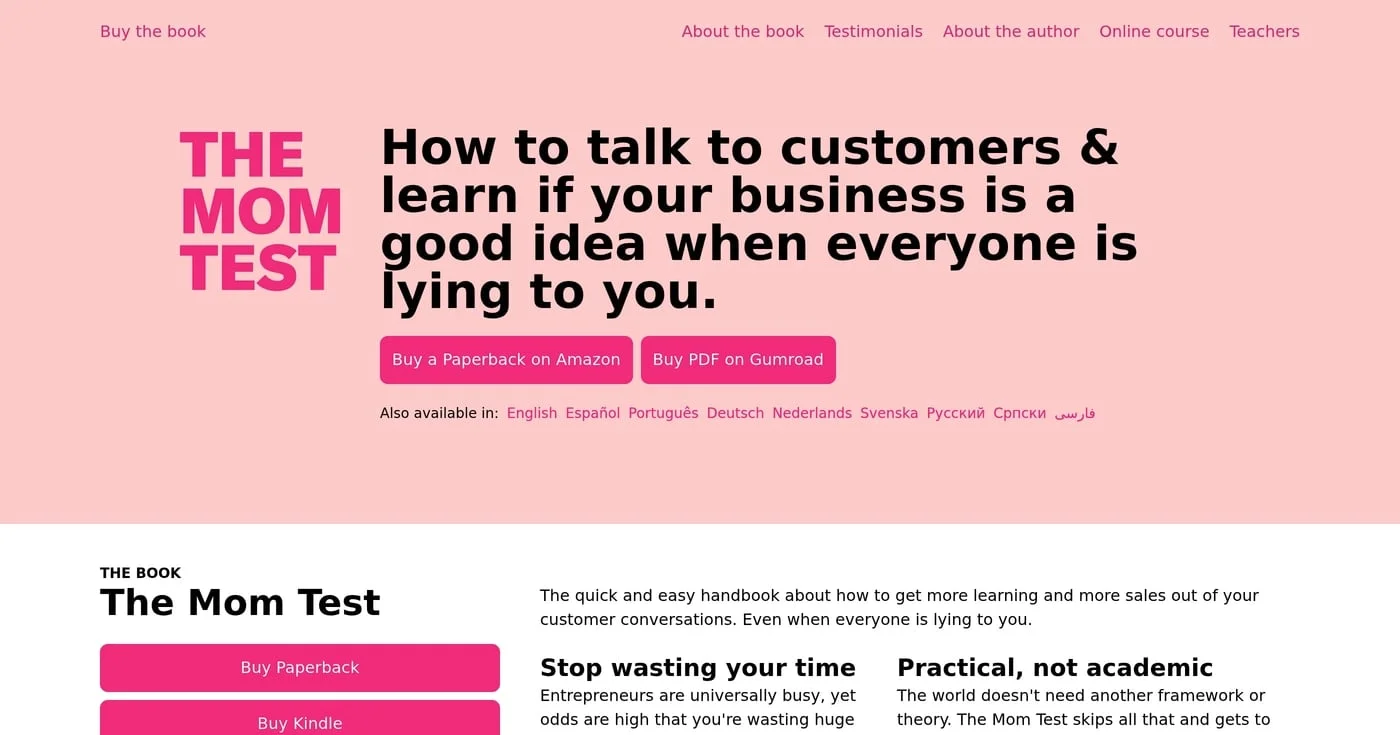
The Mom Test Without the Interview Playbook
Founder summary of The Mom Test by Rob Fitzpatrick: three rules, good vs bad questions, why compliments fail, and the commitment ask. Short book, ~120 pages.

Read

VC, bootstrap, PE. PMF signals, pitch decks, contracts, and survival reading for founders and operators.
Startup launches, funding news, and the tools founders actually use.
New startups. New tools. New funding. Short, useful, and skimmable.
SubscribeFounder summary of The Mom Test by Rob Fitzpatrick: three rules, good vs bad questions, why compliments fail, and the commitment ask. Short book, ~120 pages.

Delaware C-corp if you will raise, grant options, or want QSBS. LLC if you stay closely held and distribute profits. Covers tax, investors, conversion.

US founders agreement (co-founder agreement) worksheet: equity split, 4/1 reverse vesting, roles, IP, and leaver repurchase. Informational, not legal advice.

A registered agent is the in-state person or company who accepts lawsuits and official state mail. DIY is legal in most states; year-2 fees run from $50.

A vesting schedule is how startup equity becomes yours. Get 4-year/1-year-cliff math, founder reverse vesting vs options, and double-trigger acceleration.

Bootstrapping a business funds growth from revenue, not a priced round. Split savings from customer cash, then use the cage test for when to raise.

Five Product Hunt alternatives stacked by founder job: daily, weekly, waitlist, month-long, SEO. Live Sep 2026 pricing, cadence, and link policy compared.

16 venture capital firms mapped by stage, typical check, thesis, and how to approach each.

Median micro SaaS MRR is $145, not $4,298. Three niche frameworks, revenue data from 8,000+ startups, and 22 products with reported numbers.

Learn how advisory shares work, what Carta data says about real grant sizes, and the tax rules advisors and founders need to know.
Founder summary of The Mom Test by Rob Fitzpatrick: three rules, good vs bad questions, why compliments fail, and the commitment ask. Short book, ~120 pages.
Delaware C-corp if you will raise, grant options, or want QSBS. LLC if you stay closely held and distribute profits. Covers tax, investors, conversion.
A vesting schedule is how startup equity becomes yours. Get 4-year/1-year-cliff math, founder reverse vesting vs options, and double-trigger acceleration.
Bootstrapping a business funds growth from revenue, not a priced round. Split savings from customer cash, then use the cage test for when to raise.
16 venture capital firms mapped by stage, typical check, thesis, and how to approach each.
Median micro SaaS MRR is $145, not $4,298. Three niche frameworks, revenue data from 8,000+ startups, and 22 products with reported numbers.
Learn how advisory shares work, what Carta data says about real grant sizes, and the tax rules advisors and founders need to know.
US founders agreement (co-founder agreement) worksheet: equity split, 4/1 reverse vesting, roles, IP, and leaver repurchase. Informational, not legal advice.
A registered agent is the in-state person or company who accepts lawsuits and official state mail. DIY is legal in most states; year-2 fees run from $50.
Five Product Hunt alternatives stacked by founder job: daily, weekly, waitlist, month-long, SEO. Live Sep 2026 pricing, cadence, and link policy compared.