
16 Stage-Fit Venture Capital Firms for Founders
16 venture capital firms mapped by stage, typical check, thesis, and how to approach each.
Updated 22 min read


16 venture capital firms mapped by stage, typical check, thesis, and how to approach each.
Andreessen Horowitz raised over $15 billion in January 2026 and sits at the top of recent US Form ADV size tables. Size is the wrong targeting map. First Round still writes the first institutional check; Benchmark still leads concentrated Series A.
US VC put $320 billion to work in 2025. 65.4% of that value went to AI.
A venture capital firm is a general partner that raises limited-partner funds and takes minority stakes in high-growth companies. Y Combinator and Techstars are accelerators. Tiger Global and SoftBank Vision Fund mix non-venture books.
On r/startups, the recurring complaint is stage-label mismatch: the site still says pre-seed, then the first filter is MRR.
Forbes Midas ranks partners, not firms. Most funds are closed to non-accredited retail. This page is a founder targeting map, not an LP product.
Pair each name with the stage it actually leads, a Carta median for the round, the live thesis, and the door you use. For the market numbers, see the venture capital statistics hub.
For the round ladder, see startup funding stages. Control buyers live on a different list: private equity funds.
Ordered by the stage each firm actually leads (multi-stage platforms, then concentrated early-stage partnerships, then growth), not by AUM or branded-search volume.
Firm | Best For | Sector | Latest Fund | How to Approach |
|---|---|---|---|---|
Multi-stage platform | AI, crypto, American Dynamism, bio | $15B+ (Jan 2026) | Sector GP; Speedrun is a separate apply path | |
Seed through IPO | AI from models to apps | $7B expansion (Apr 2026) | Warm intro to the category partner | |
Enterprise / AI apps | Infra, dev tools, AI apps | $5B late-stage (Apr 2026) | Thesis fit; India and Europe are real doors | |
Conviction multi-stage | AI infra, enterprise | 2026 fund not on a primary close page | Pitch depth, not a spray check | |
Applied AI / health | AI, health assurance | Multi-stage; read the ADV | Confirm the partner's current envelope | |
Cloud SaaS A-C | Cloud, vertical SaaS | Multi-stage SaaS book | Atlas / Cloud 100 pattern fit | |
Small partnership | AI, enterprise | $3.5B (Mar 2026) | Relationship; five investment partners | |
Idea to IPO | Tech + healthcare | Multi-stage tech + healthcare | Healthcare and enterprise growth | |
Concentrated Series A | Consumer, infra, crypto | $2B (Jun 2026) | Intro to a specific equal GP | |
Thesis-first early | Defense, frontier | Multi-stage; thesis-first | Trae Stephens for defense; thin public intake | |
Contrarian science | AI, climate, bio, fusion | Early, science-heavy | Technical seed; not a SaaS growth mill | |
First institutional check | Enterprise, consumer | Early-stage specialist | Category-defining team, small senior partnership | |
Pre-seed / seed only | Broad early | Seed specialist (no ADV row) | First check; do not pitch a $40M Series A | |
US-Europe companies | Consumer, fintech, enterprise | $3.5B (Jul 2026) | Founder-character story; transatlantic plan | |
Software ScaleUp | Enterprise software | Firm over $90B RAUM | Do not seed-pitch; GTM-scale story | |
Concentrated growth | AI, software | Concentrated multi-stage | Warm intro only; blank public homepage |
16 venture capital firms by stage, sector, latest fund, and approach
Use Carta for 2026 software round sizes. Do not invent a typical first check per firm.
Stage | Carta median valuation | Carta median raised | Carta dilution | Conflicting print |
|---|---|---|---|---|
Seed | $4.1M | 18% | NVCA $16M seed pre-money; OpenVC $4-20M valuations / $1-5M checks | |
Series A | $14.4M | 18% | CRV still frames 2025 Series A medians around $5-15M | |
Series B | $191M | $25M | 12% | n/a |
Series C | $391M | ~$40M | <10% | n/a |
Carta Q4 2025 already had seed at $24 million post-money and Series A at $78.7 million (+37% year over year). In Carta's 2025 review, the AI premium on Series A valuation versus non-AI was 38%. Bottom 50% of US Carta startups that closed a round took 14% of the cash; the top 10% took about 50%.
CRV still sees competitive B2B SaaS Series A in a $2-5 million ARR band. Seed-to-A graduation is cohort-specific on Carta. Do not treat it as a single 2026 average.
Median time seed to A on Carta's Q2 2025 print was 616 days. Raise 18-24 months of runway, not a two-week process.
The one verified late-stage band in this set: Accel's Leaders Fund writes checks that average about $200 million. That is not a seed product.
These eight multi-stage firms run seed through growth. The useful question is which product inside the firm matches your round.
Best for sector-platform checks from seed through growth

Andreessen Horowitz raised over $15 billion in January 2026 across Growth ($6.75 billion), Apps ($1.7 billion), Infrastructure ($1.7 billion), American Dynamism ($1.176 billion), Bio + Health ($700 million), and other venture books. Ben Horowitz put that haul at over 18% of US VC dollars allocated in 2025. Use the firm's SEC Form ADV for current regulatory AUM rather than a third-party size table.
Treat a16z as several doors. The brand is not one inbound. Associates still source what lands on a GP desk, but the check and the board seat sit with a named partner.
Speedrun is a separate apply path (up to $1 million). Crunchbase counted at least 165 post-seed deals in 2025.
The platform (recruiting, marketing, policy, media) is useful if you want in-house ops, and a mismatch if you want a six-person partnership on your board. Pitch the sector GP who owns your category.
Best for outlier companies from seed through IPO
Peak XV (India) and HongShan (China) are separate counterparties from US Sequoia. The US and Europe partnership still runs seed through IPO, including an evergreen that can hold past listing. The filing entity is Sequoia Capital Operations (ADV dated 17 July 2026).
The 2025-26 raise is two products. On 27 October 2025 Sequoia unveiled $750 million for early-stage / Series A plus a $200 million seed vehicle.
On 16 April 2026 it raised about $7 billion of expansion capital under Alfred Lin and Pat Grady. Seed is still seed, not volume.
Thesis copy now runs AI from models to applications. Approach is a warm intro to the category partner. Do not cold-email the brand.
Best for enterprise, AI apps, and India or Europe doors
Accel still sells itself as first partner from inception through later phases. The US entity, Accel Management Co., files a Form ADV.
The 2026 headline is late-stage. On 15 April 2026 Accel raised $5 billion: a $4 billion Leaders Fund (about 20 checks averaging about $200 million) plus a $650 million sidecar. That is not a seed product.
Seed and Series A still live in the older partnership, with real doors in India and Europe.
Approach on thesis alignment in enterprise infrastructure, developer tools, and AI applications. If your round is a $4 million seed, Leaders Fund is the wrong room.
Best for conviction-led multi-stage, including AI infrastructure

Stage range on Lightspeed's site runs seed to Series F. The firm registered as an investment adviser in 2025 (SEC approved 28 April 2025). Read the ADV for current AUM rather than a third-party size table.
The live homepage signal in August 2026 is a deepening Anthropic Series F, not a seed manifesto. India and China are different partnerships.
Pitch depth and a point of view. A spray check is the miss.
Confirm the partner's current envelope before you treat Lightspeed as a seed door.
Best for applied AI and health-system bets
General Catalyst describes itself as applied AI plus "health assurance." In 2025 its HATCo vehicle closed a $515 million acquisition of Summa Health: GC as a strategic acquirer, not only a minority investor. Read the Form ADV for current regulatory AUM.
Activity rankings are not a seed-specialist label. Confirm the partner's current check envelope before you treat GC as a seed door.
Healthcare founders should expect the hospital-system overlay: a feature if you are building into care delivery, a complication if you wanted a clean minority check and no operator parent.
Best for cloud and vertical SaaS from Series A to C
Bessemer has been in venture since 1974. The public product founders actually use is the pattern library: Atlas roadmaps and the Cloud 100. Read the firm's Form ADV for current regulatory AUM.
Lead Series A through C in cloud and vertical SaaS is the core book. BVP Forge is a PE-style vehicle. Label it; do not mix it with the venture partnership when you are raising a minority round.
Approach if you want published benchmarks and every-stage capital in SaaS. The firm is a weak match for pre-product science.
Best for a small partnership with growth continuity

Kleiner Perkins (founded 1972) does not publish a current AUM on its homepage. Do not invent one. What is verified: on 24 March 2026 the firm announced $3.5 billion across KP22 ($1 billion early-stage) and $2.5 billion of growth (Select IV / Flex).
The investment partnership is a lean five-partner room. Rippling's $25 million Series A was, at the time, KP's largest early check.
Approach is relationship-heavy. An early check with growth continuity is the product.
The product is a small senior room, not an a16z-style platform.
Best for tech and healthcare from idea to IPO
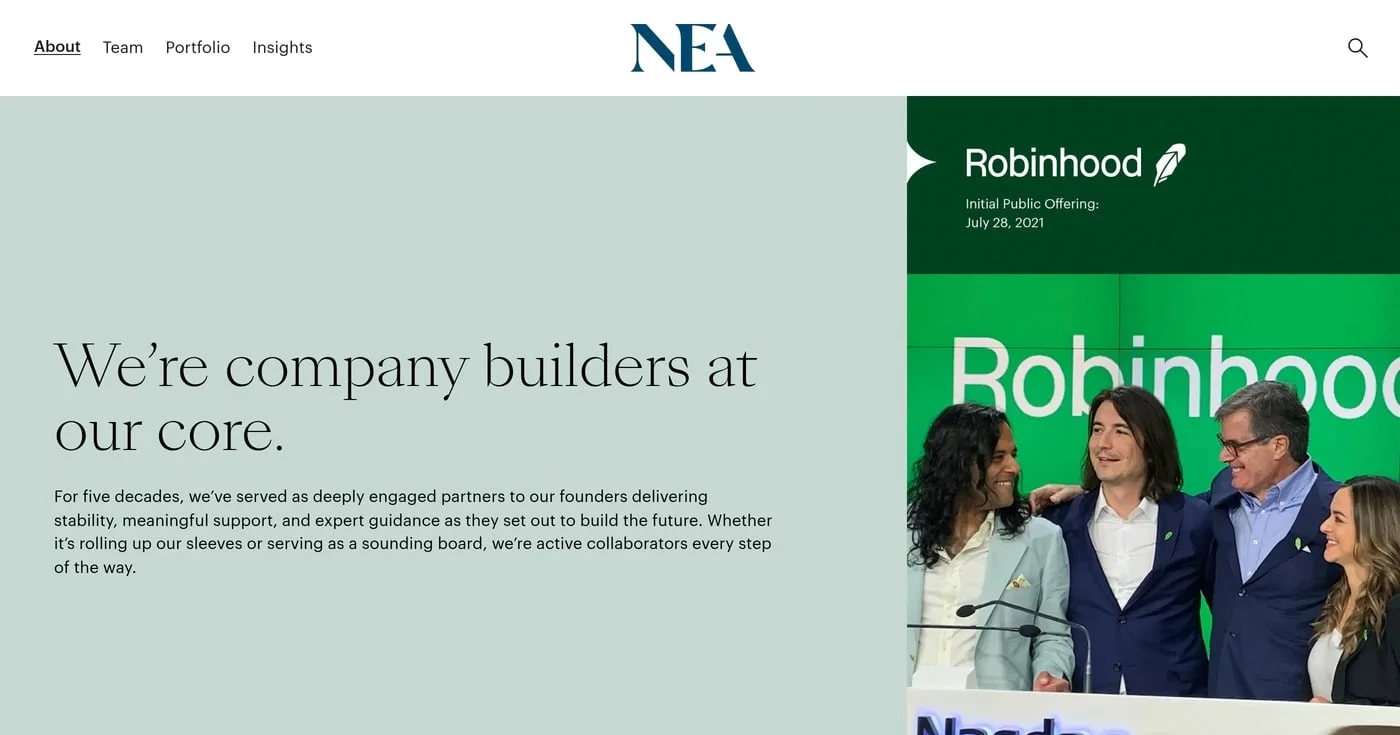
NEA (founded 1977) sells idea-to-IPO coverage across technology and healthcare. It has historically cited more than 270 portfolio-company IPOs (that 2023 release is a self-report, not a 2026 filing). Read the Form ADV for current AUM.
NEA is a multi-stage generalist, not a seed specialist. Healthcare and enterprise growth are the dense parts of the book. A rumored NEA 19 target is not a verified close, so do not treat a target as dry powder.
Approach as a long-duration partner if your category sits in those two dense books. Skip NEA as a "pre-seed brand" just because the website still says idea-stage.
These six partnerships still lead early. The meeting is with a specific partner, and ownership is the product.
Best for concentrated Series A with a large ownership stake
Benchmark (founded 1995) still runs equal general partners, no junior investment staff, and typical ~20% stakes. On 3 June 2026 it raised $2 billion: a $750 million 12th flagship plus a first-ever $1.25 billion growth fund. The flagship had sat near $425 million for two decades.
The growth fund is the 2026 concession to AI capital intensity. It is not a seed product. The firm has not invested in Anthropic, OpenAI, or other foundation-model labs; fund size is the constraint.
Approach is an intro to a specific GP (Peter Fenton, Eric Vishria, Sarah Tavel, Ev Randle). Cold email to the blank homepage will fail. They lead and take a large stake.
Best for defense, frontier, and hard-tech theses

Founders Fund (founded 2005) is an exempt reporting adviser. Marketing AUM prints and private-fund GAV often diverge by tens of billions. GAV is not a quality ranking.
The public thesis is still "what would you build if you could start over?": defense, satellites, frontier. Trae Stephens is the defense door.
Founders Fund is not a SaaS seed mill. Public intake is thin by design.
Pitch a hard problem with a technical founder. A conventional B2B growth round is the wrong room.
Best for technical, contrarian science and climate
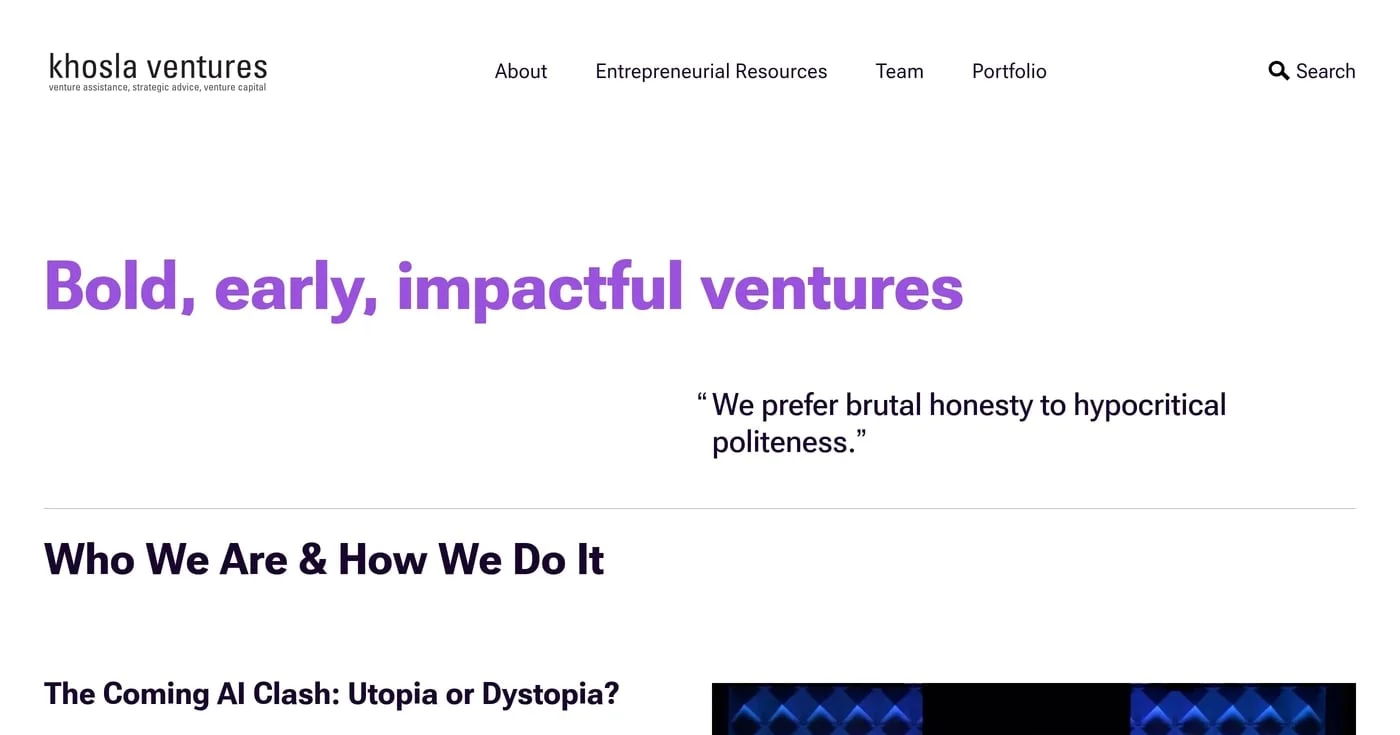
Khosla Ventures (founded 2004) prefers brutal honesty to hypocritical politeness, and patience on science: AI, climate, bio, fusion. Read the Form ADV for current AUM.
Khosla's own LinkedIn frames Commonwealth Fusion Systems as a 2019 bet "when almost no other fund would touch fusion." Treat announced science outcomes as firm-claimed. The useful signal is willingness to sit in an unpopular category for years.
Approach as technical or contrarian seed. Do not pitch a conventional SaaS growth round as the primary product.
Best for first-check enterprise and consumer software
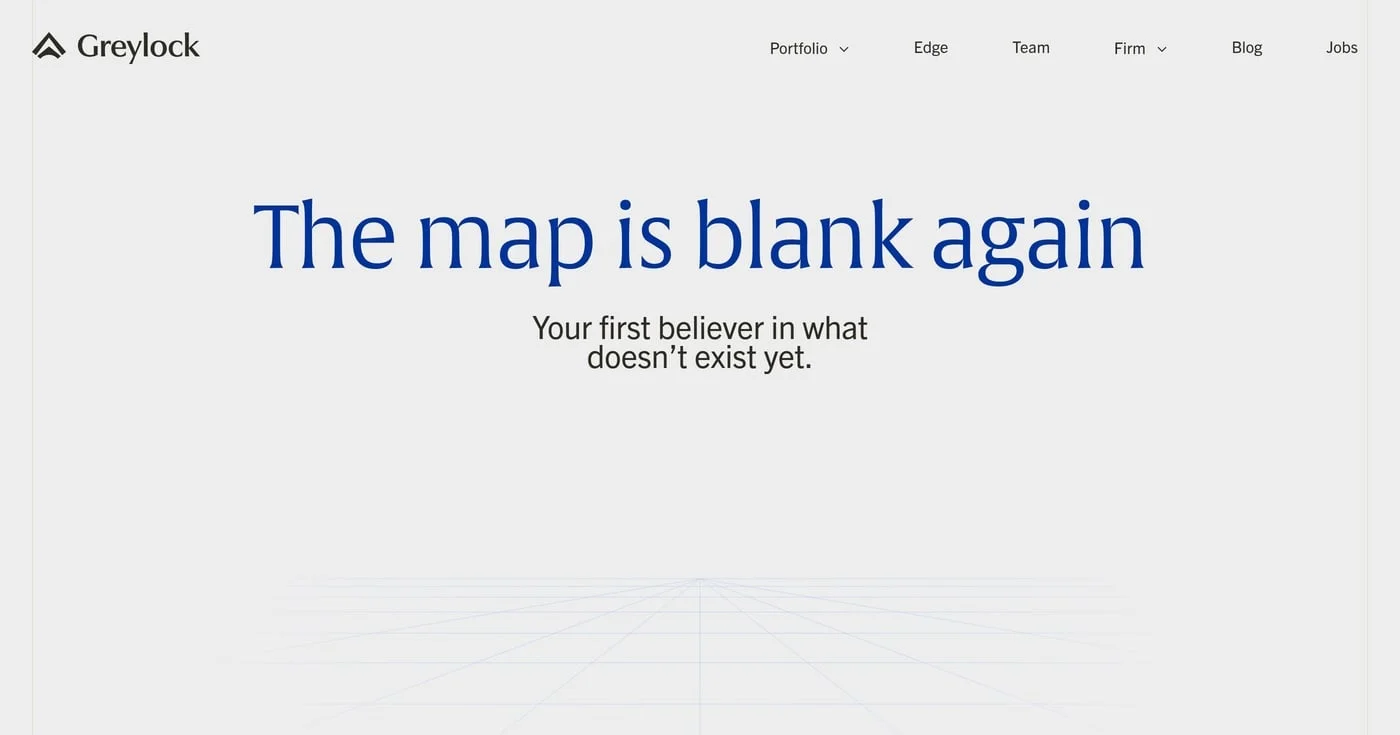
Greylock (founded 1965) does not publish a current AUM on its homepage. Do not invent one.
Greylock's Fund 17 announcement said more than 80% of investments in the prior fund were pre-seed, seed, or Series A. Treat that as a self-reported stage mix, not a filing. The current homepage line is "the map is blank again": an AI-reset thesis, not a growth manifesto.
Approach a category-defining team to a small senior partnership. Pitch a growth round here and you have the wrong firm.
Greylock is one of the few remaining brand-name first-check doors that is not an accelerator.
Best for the first institutional pre-seed or seed check

First Round (founded 2004) is pre-seed and seed only. The site still frames checks "when all they have is an imagine if." First Round's own Who We Back page puts the average initial check at $3.5 million, with rounds from $100,000 to $20 million. Treat third-party $1-7 million / 10-15% ownership ranges as secondary, not a First Round filing.
Post-close, First Round coaches founders into the multi-stage layer. That is the product. Do not pitch a $40 million Series A here as lead.
Former-founder partners are the texture. Approach as the first institutional check among brand names, then use the network for the A.
Best for transatlantic companies from seed through growth
In July 2026 Index (founded 1996) said $3.5 billion across seed, venture, and growth. The filing entity is Index Ventures SA, an exempt reporting adviser.
The line on the LinkedIn post is relationship craft: find people early and stay. Founder-character story matters. US-Europe ambitions are the geographic filter.
Approach if your company is actually transatlantic. A purely US local SaaS with no Europe plan is a weaker Index meeting.
Do not seed-pitch these two. The AUM is real. The door is ScaleUp or concentrated growth.
Best for software ScaleUp after product-market fit

Insight (founded 1995, New York) says over $90 billion of regulatory AUM as of 31 December 2025. This is software ScaleUp: Series A through IPO, with an operating team built for sales-engine scale (Wiz, monday.com, SentinelOne).
Seed founders: skip. The brand will still show up in "top VC" lists because of AUM. The product is GTM scale after you already have a software engine.
Fund XIII closed at $12.5 billion in January 2025, down from Fund XII at more than $20 billion. That is concentration, not disappearance.
Best for a few high-conviction growth bets per year
Thrive (founded 2009, New York) keeps an intentionally blank homepage. Concentrated multi-stage: few high-conviction bets per year (OpenAI, Wiz), not a public intake machine. The Form ADV is dated 6 July 2026.
Warm intro only. There is no Speedrun equivalent. If you need a productized inbound, this is the wrong firm.
Treat Thrive as a growth / high-conviction door, not a seed spray.
Y Combinator is an accelerator, not an AUM-table VC firm. Techstars and 500 Global belong in the same bucket. Outcome rankings still treat YC as a seed-outcome leader, not as a traditional AUM-table partnership.
The NVCA 2026 Yearbook counted 2,984 US VC firms in existence, the first decline on the series. Angels, CVCs, and accelerators sit outside that dedicated-firm count.
Tiger Global, SoftBank Vision Fund, Coatue, and ICONIQ mix non-venture books. Do not treat them as traditional partnership VC.
Accel-KKR is a PE/tech buyout shop, not Accel VC. OpenVC lists 833 CVC firms with different incentives (strategic parent, not independent GP). Do not flatten them into this table.
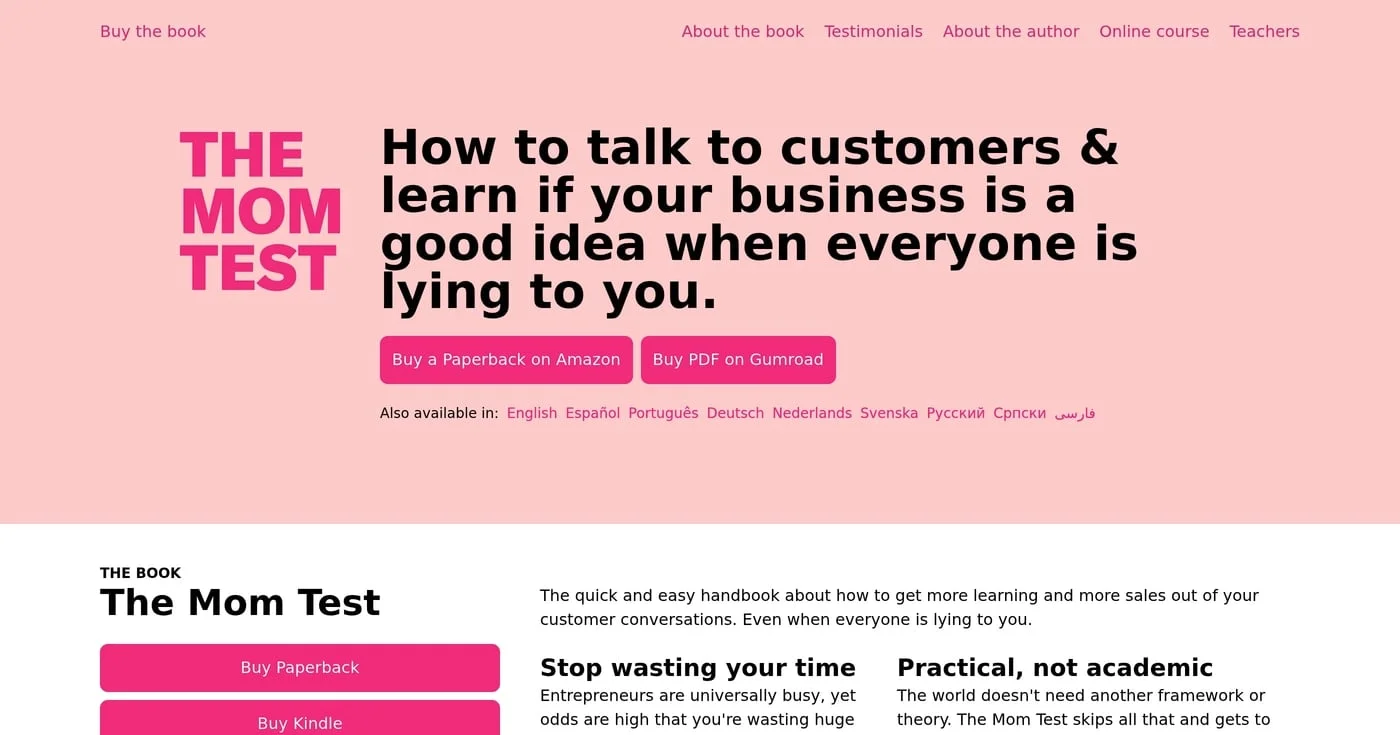
Founder summary of The Mom Test by Rob Fitzpatrick: three rules, good vs bad questions, why compliments fail, and the commitment ask. Short book, ~120 pages.

Delaware C-corp if you will raise, grant options, or want QSBS. LLC if you stay closely held and distribute profits. Covers tax, investors, conversion.

A vesting schedule is how startup equity becomes yours. Get 4-year/1-year-cliff math, founder reverse vesting vs options, and double-trigger acceleration.
