
Best Crowdfunding Platforms: 10 Top Picks for 2026
Compare the 10 best crowdfunding platforms in 2026 by funding type, fees, and use case. Covers Kickstarter, GoFundMe, Republic, Wefunder, Patreon, and more.
Updated 13 min read

Compare the 10 best crowdfunding platforms in 2026 by funding type, fees, and use case. Covers Kickstarter, GoFundMe, Republic, Wefunder, Patreon, and more.
The best crowdfunding platforms in 2026 are Kickstarter for reward-based product launches, GoFundMe for personal causes and nonprofits, and Republic for vetted startup equity raises. Each platform serves a different funding model, audience, and fee structure. investment crowdfunding grew 58% in 2025 to $924.8 million raised, making platform selection more consequential than ever.
The right platform depends on your goal: are you validating a product, building a community, raising equity capital, or funding a personal need? Below, 10 platforms ranked by use case, with verified fees and platform stats.
In this guide, you'll explore the top 10 best crowdfunding platforms available in 2026.
Platform | Best For | Funding Model | Fees | Free Plan | Available In |
|---|---|---|---|---|---|
Creative products | Reward | No (all-or-nothing) | US, UK, CA, AU, EU+ | ||
Tech gadgets | Reward | No | Global | ||
Personal causes | Donation | Yes (0% platform fee) | Global | ||
Vetted startups | Equity | No | US | ||
Community rounds | Equity | No | US | ||
Equity CF access | Equity | 5–10% | No | US | |
Creator memberships | Subscription | Yes (free to start) | Global | ||
Microloans | Debt | Yes | US | ||
Startup profiles | Reward + Equity | No | US | ||
UK/EU equity | Equity | No | UK, EU |
Best for creative product campaigns and consumer hardware
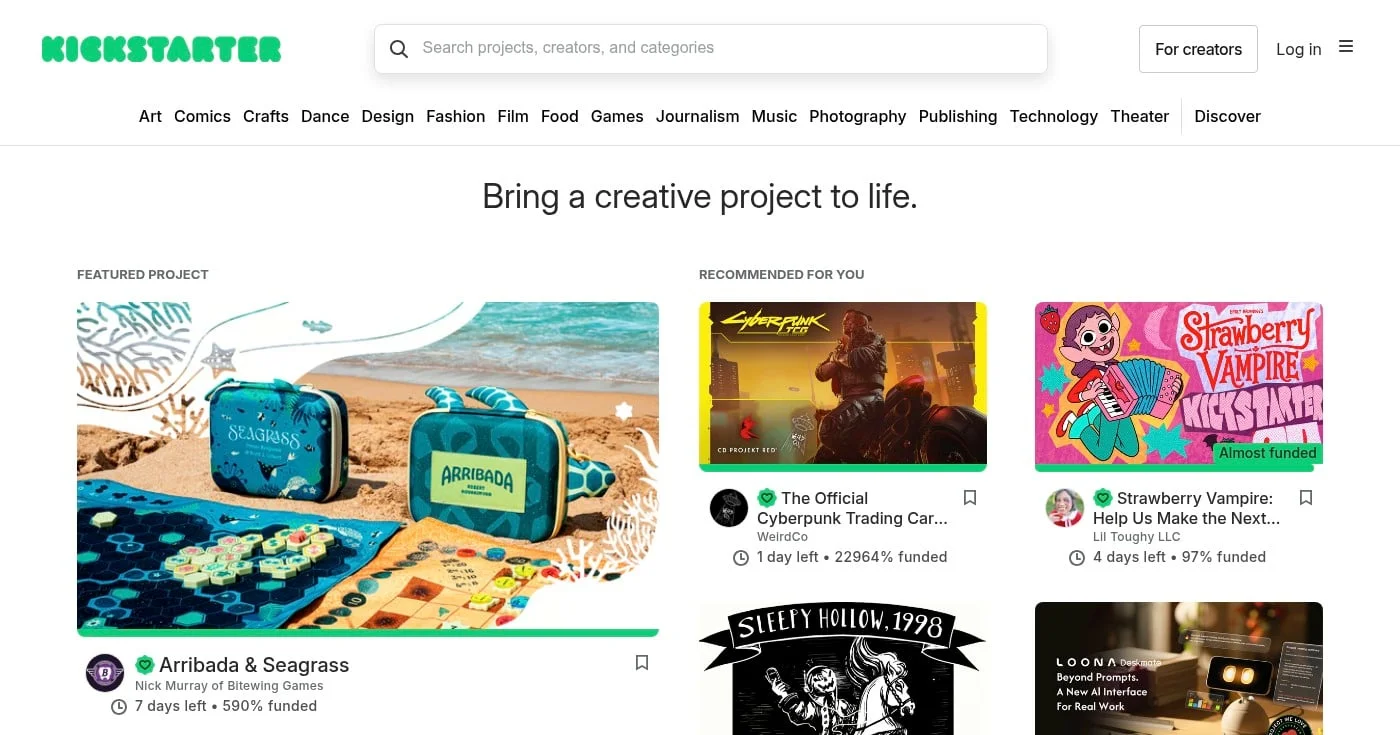
Kickstarter is the world's largest reward-based crowdfunding platform, built for creators launching physical products, games, films, and art projects. Since 2009, it has funded 273,367 projects with $8.55 billion pledged and nearly 24 million backers.
The platform uses an all-or-nothing model: backers aren't charged unless the campaign reaches its goal. This builds trust because supporters know their money only moves when a campaign is viable.
Kickstarter's overall success rate is 42%, but varies by category. Comics succeed at 67.7%, while Technology hits only 23.9%.
No fees if the campaign doesn't reach its goal. See Kickstarter's fee page for full details.
Best for flexible funding and ongoing product sales
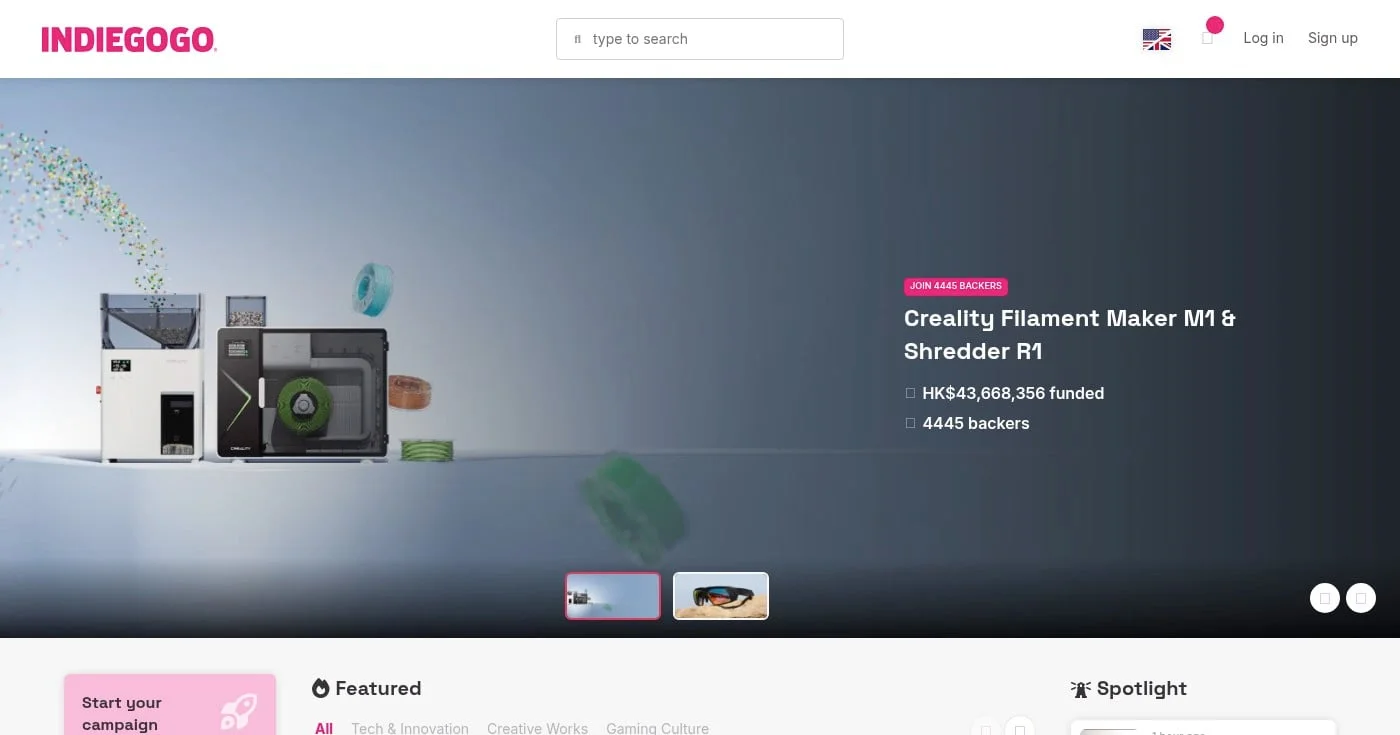
Indiegogo offers both fixed and flexible funding models, making it appealing for creators who want to raise money even if they don't hit their original goal. Its InDemand feature lets campaigns continue selling after the campaign period ends, useful for hardware products with ongoing demand.
Indiegogo's global reach and flexible funding attract creators who can't afford to walk away empty-handed. Large raises above $500,000 may negotiate platform fees down to 4%–4.5%.
Campaigns that funded on Kickstarter often migrate to InDemand for ongoing pre-orders, extending revenue well beyond the initial campaign window.
No fees if campaign doesn't reach its goal under the fixed model.
Best for personal causes, emergencies, and nonprofit fundraising
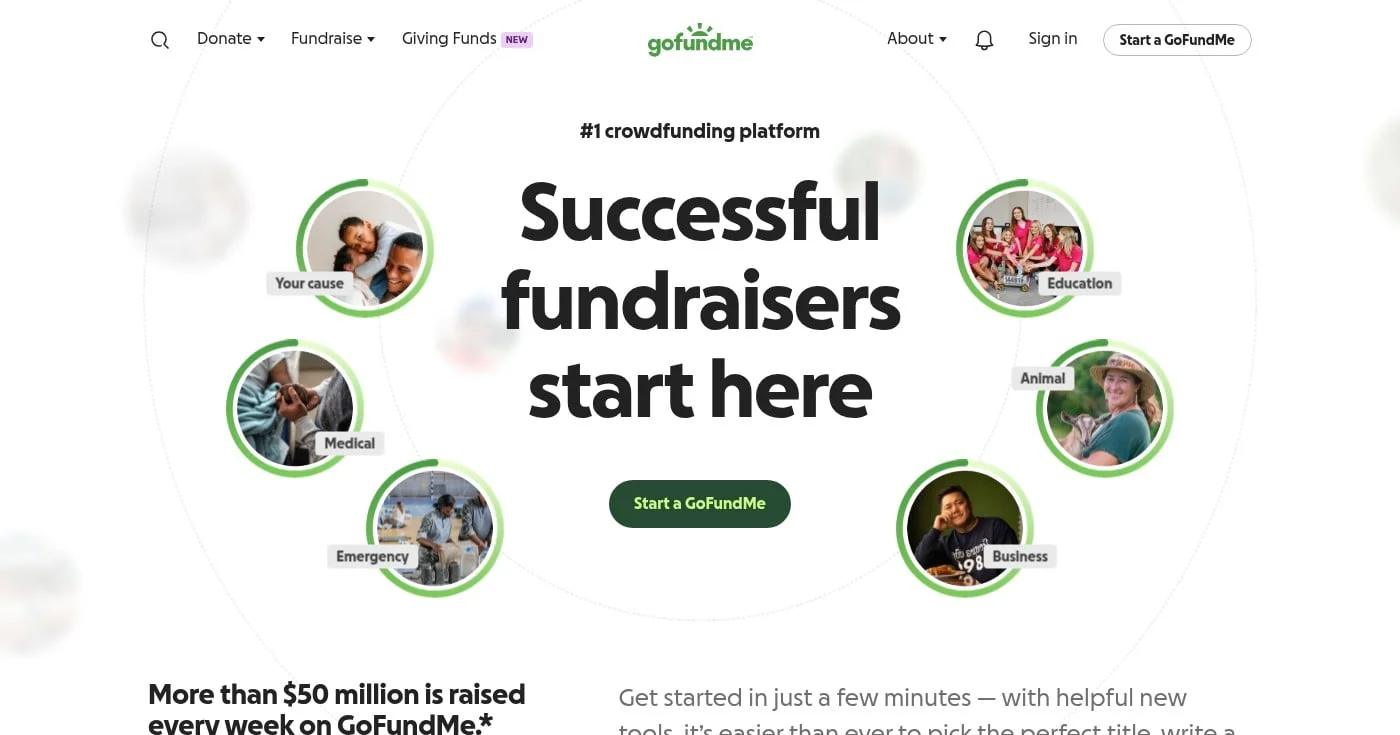
GoFundMe is the dominant donation-based crowdfunding platform with 190 million+ people worldwide and $40 billion raised since 2010. It's purpose-built for personal needs: medical expenses, memorial funds, emergency relief, and charitable causes.
GoFundMe charges no platform fee for individuals. You keep everything raised minus payment processing, making it one of the most cost-effective fundraising options when financial return isn't part of the equation.
GoFundMe Pro targets nonprofits with custom pricing and lower processing fees (2.2%–2.5% + $0.30), worth evaluating for registered organizations running recurring campaigns.
Best for vetted startups raising equity from a broad investor base
Republic is an equity crowdfunding platform that has facilitated $3 billion in investments across 2,500+ companies. It supports both Reg CF (open to all investors) and Reg A+ (larger raises), making it one of the most versatile equity platforms in the US.
Republic accepts fewer than 5% of applicants. That curation builds a higher-quality investor community and adds credibility to campaigns that make it through. Republic's 3 million+ investors include both accredited and non-accredited investors.
Beyond equity, Republic offers tokenized assets and a secondary market for shares, giving founders and investors more liquidity options than most competing platforms.
Legal and compliance costs are additional.
Best for community-driven equity rounds with customer investors
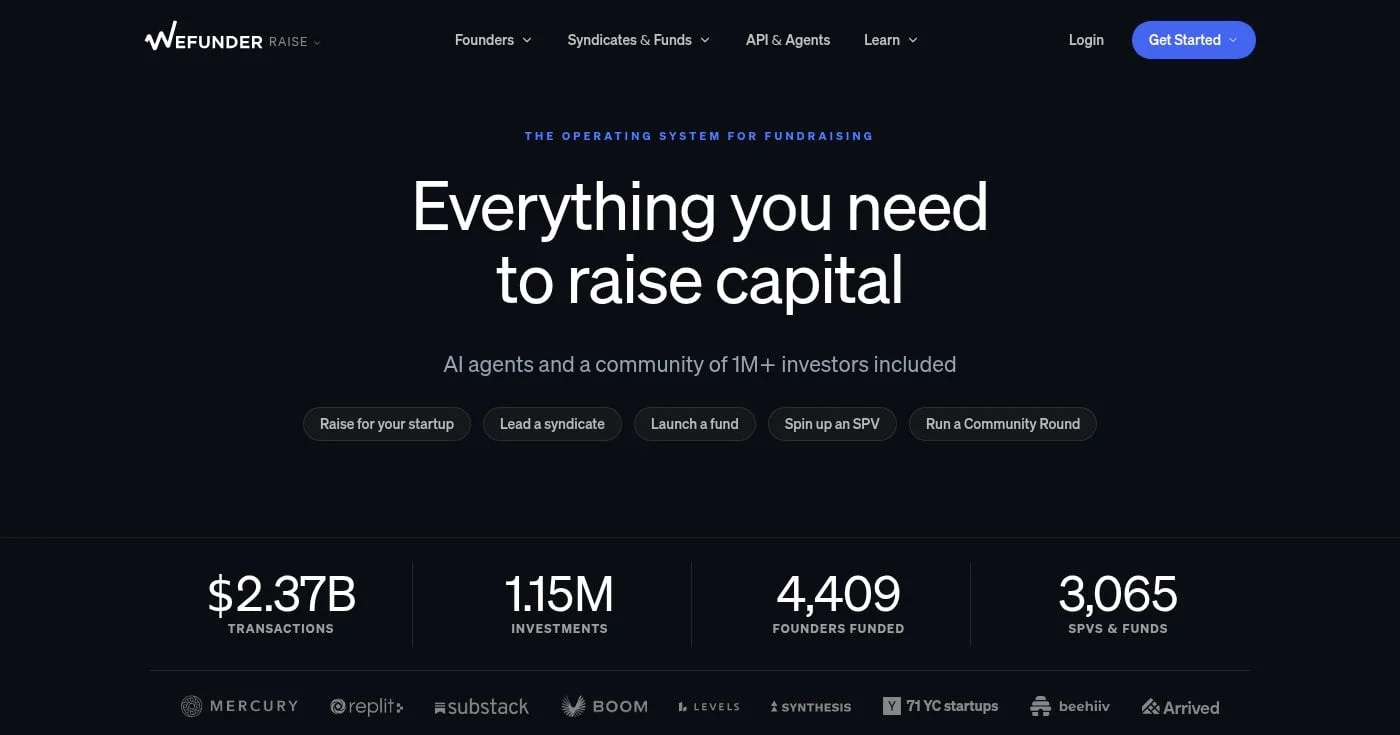
Wefunder has processed $2.13 billion in transactions across 3,955+ funded founders. Its Community Round lets customers, fans, and the public invest as little as $100, turning your user base into a shareholder base.
Wefunder also offers Private Rounds for accredited-only investors, which are free for founders (investors pay the SPV costs). The Investor Warmup tool lets you build interest before your round opens, creating a queue of committed investors for launch day.
For startups with a built community, the Community Round model validates product-market fit while simultaneously closing funding.
Best for US equity crowdfunding open to non-accredited investors
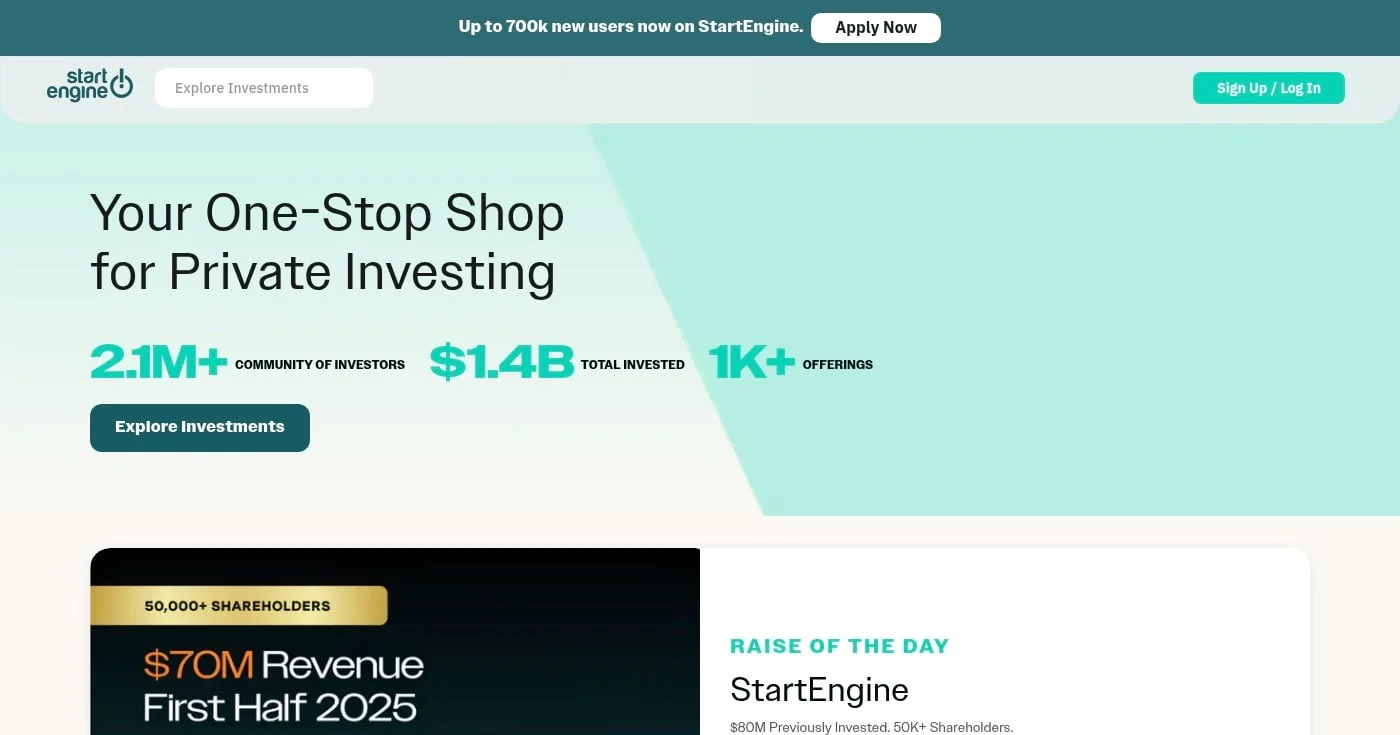
StartEngine is one of the oldest and largest equity crowdfunding platforms in the US, offering Reg CF, Reg A+, and Reg D campaigns. Co-founder Howard Marks previously built Activision into a gaming giant, lending significant operational experience to the platform.
StartEngine opens equity investing to non-accredited investors. Investors pay a 3.5% fee on top of the share price. The platform also runs StartEngine Secondary, a trading marketplace where investors can buy and sell shares of funded companies.
All three SEC-regulated offering types are supported, making StartEngine flexible for companies at different funding stages.
StartEngine is a FINRA-registered funding portal and SEC-regulated broker-dealer.
Best for creators seeking predictable recurring revenue
Patreon is a subscription and membership platform where creators earn recurring income directly from fans. Since 2013, fans have sent $10 billion to creators across 300,000+ active accounts.
The platform serves podcasters, YouTubers, writers, musicians, and visual artists. Patreon handles payment processing, tax compliance, fraud protection, and subscription management, so creators focus on content rather than infrastructure.
With 10 million+ paying fans per month and Spotify integration for podcasters, Patreon is the most established creator subscription platform available.
Free to start. Fees only begin when you start earning.
Best for small businesses needing 0% interest microloans
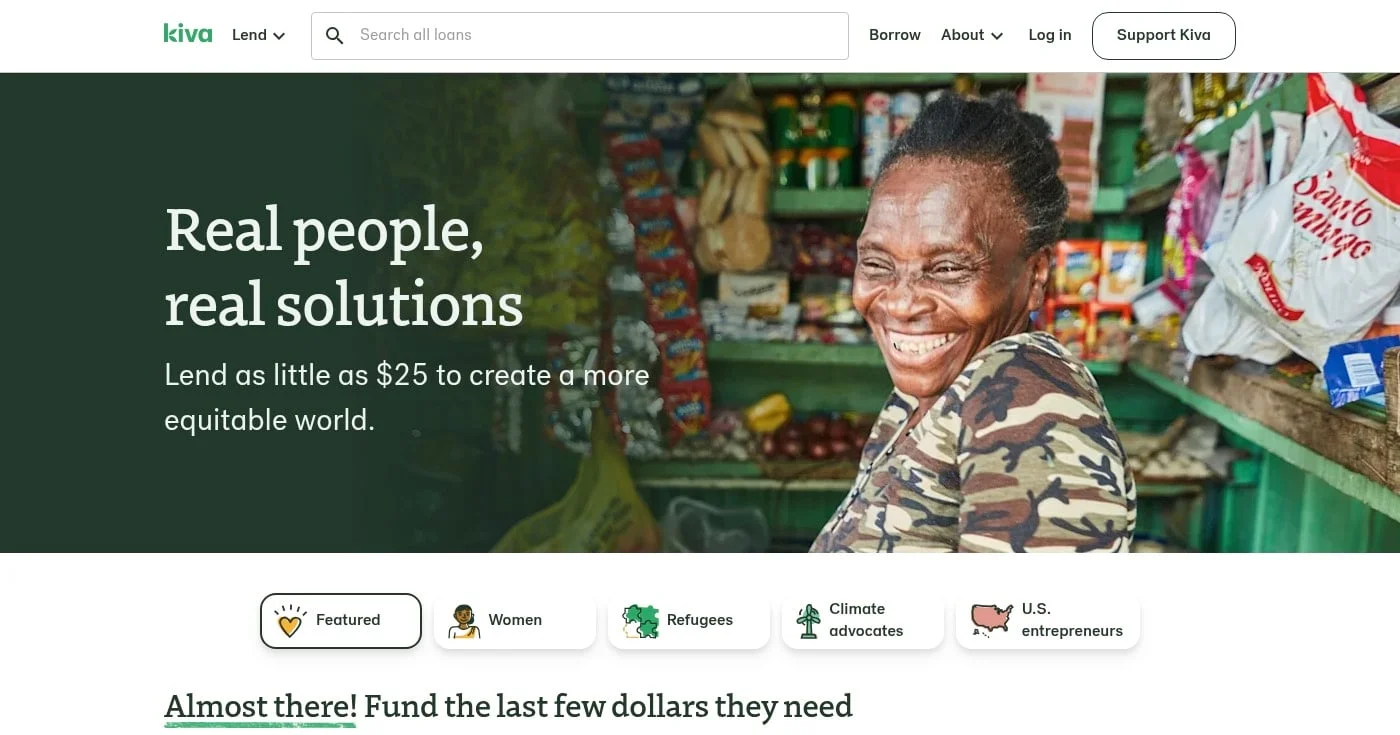
Kiva is a microloan crowdfunding platform where US small business owners can borrow up to $15,000 at 0% interest with no fees and no minimum credit score requirement. Lenders from Kiva's 2 million+ worldwide network fund the loan, which borrowers repay over 12–36 months.
The process includes a social underwriting step: you invite friends, family, and colleagues to lend to you first, proving creditworthiness to the broader network. This helps underbanked entrepreneurs who lack access to traditional credit.
Repayment: 12–36 months after receiving the loan. Applications: 30–60 minutes; approval: 10–15 business days; fundraising: approximately 20–30 days.
Best for US startups building investor profiles for accredited investors
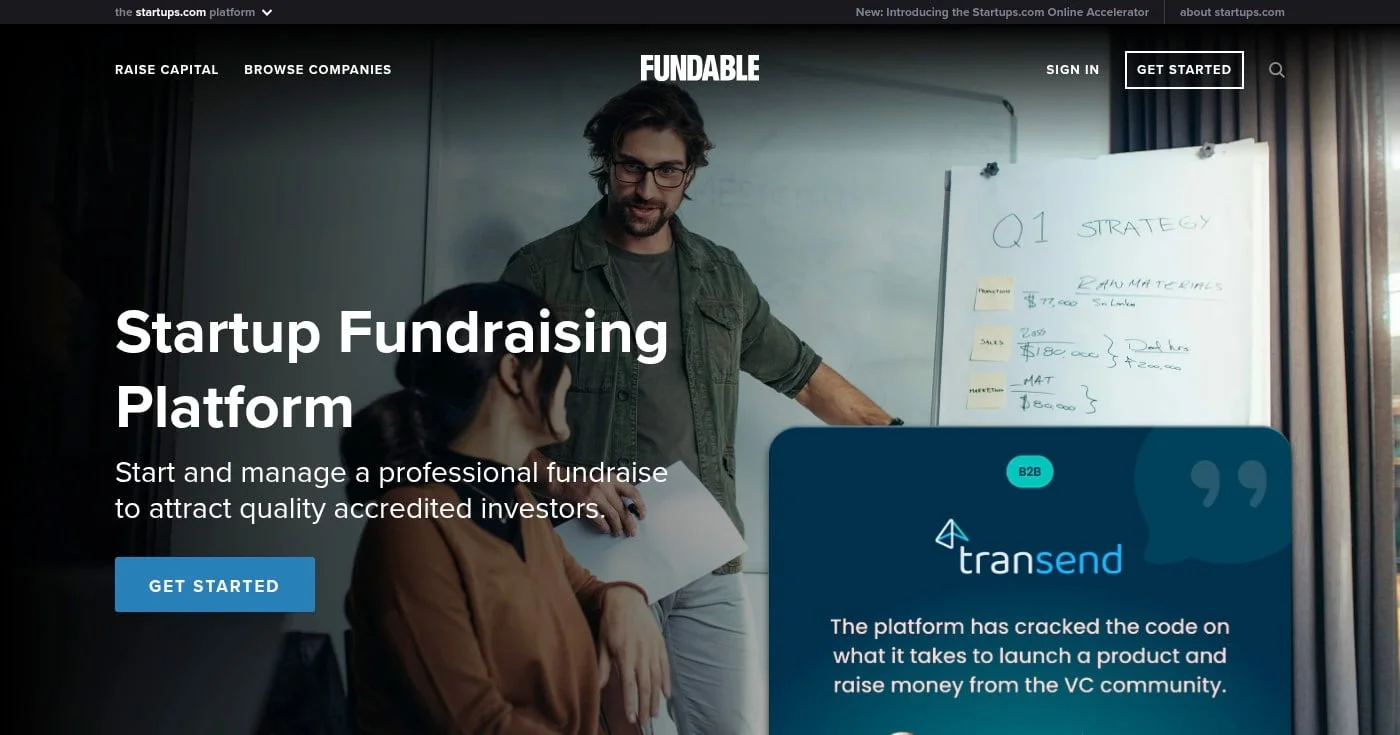
Fundable is part of the Startups.com platform and offers both rewards and equity fundraising for US-based startups. Unlike most equity platforms, Fundable charges a flat monthly subscription rather than a success fee, which benefits companies running longer campaigns or raising larger amounts.
Founders build a fundraise profile for free, then activate it for $179/month when ready to pursue investors. The platform connects startups with accredited investors through a structured pitch system.
Fundable suits startups with existing investor relationships to formalize, or founders who want a structured online profile to share independently.
Profile creation is free. Pricing is not pro-rated.
Best for UK and European startups seeking equity investment
Crowdcube is Europe's leading private market investment platform, FCA-regulated, and the platform of choice for UK startups. It has backed early-stage Monzo and BrewDog, giving it a strong track record in the UK startup ecosystem.
Crowdcube charges businesses a 7% platform fee covering variable third-party payment costs. Investors pay a 2.49% fee (minimum £5). The platform also offers a secondary market for trading shares in previously funded companies.
Additional legal fees apply for campaign preparation.
The best crowdfunding platform depends on what you're funding and who you're funding it with. Kickstarter and Indiegogo lead for reward-based product launches.
GoFundMe is unmatched for personal causes. Republic, Wefunder, and StartEngine serve different stages of equity crowdfunding.
For creators, Patreon's recurring revenue model stands apart. With the global crowdfunding market projected to reach $5.43 billion by 2033, choosing the right platform from the start is worth the research time.
For more on how startups are built and funded, visit You Startups for founder stories, funding news, and startup resources.

US founders agreement (co-founder agreement) worksheet: equity split, 4/1 reverse vesting, roles, IP, and leaver repurchase. Informational, not legal advice.
A registered agent is the in-state person or company who accepts lawsuits and official state mail. DIY is legal in most states; year-2 fees run from $50.

Five Product Hunt alternatives stacked by founder job: daily, weekly, waitlist, month-long, SEO. Live Sep 2026 pricing, cadence, and link policy compared.
