
Founders Agreement Template: Split, Vesting, and Leavers
US founders agreement (co-founder agreement) worksheet: equity split, 4/1 reverse vesting, roles, IP, and leaver repurchase. Informational, not legal advice.
Updated 13 min read


US founders agreement (co-founder agreement) worksheet: equity split, 4/1 reverse vesting, roles, IP, and leaver repurchase. Informational, not legal advice.
A founders agreement records who owns what, how stock vests, who decides, and what happens if a cofounder leaves. Cooley GO and Clerky paper those calls as a restricted-stock package with reverse vesting, a PIIA, and an 83(b) election. 45.9% of two-founder teams on Carta split equally in 2024.
This page is a US decision worksheet for a startup that will incorporate, usually a Delaware C-corp. It is not legal advice and not tax advice. If you are staying an LLC, use the operating agreement instead.
Get the founders agreement worksheet in Google Sheets and fill the eight blocks before counsel drafts the stock documents.
Google's top result for this query is a 2014 SEC exhibit, or an unsigned Word file. Counsel does not paper a VC-bound Delaware C-corp that way.
Cooley GO (last reviewed 23 Jan 2022) says most high-growth companies set up for venture funding skip a standalone stockholder agreement. Delaware defaults, bylaws, and per-founder vesting agreements with the company cover the same ground. Clerky says startups on the standard process rarely need a separate shareholder agreement.
You still need a written record of the calls those documents will encode. A pre-incorporation agreement can capture roles and an intended split before the entity exists. Buchanan Ingersoll notes there is no legal requirement to have one.
On r/SaaS, the recurring complaint is a handshake split with no cliff, then a leaver who still owns a large block.
Fill the worksheet. Then have counsel turn it into an RSPA, a PIIA, and a Form of 83(b).
No AmLaw page gives you a formula. Orrick (Nick Feldman and Cody Peterson, 6 Apr 2026) says 50/50 is usually not the right answer: the split is never exactly equal, and equal voting plus a two-director board can deadlock. Vesting matters more than the first-day percentage.
Carta shows equal splits rising. Founder Ownership Report 2025, more than 45,000 Carta companies (2015-2024):
Fact | Number |
|---|---|
Two-founder equal split, 2024 | 45.9% (31.5% in 2015) |
Two-founder 2024 median | 51/49 (was 60/40 in 2015 and 2019) |
Three-founder even split | 12.1% to 26.9% (2015 to 2024) |
Three-founder 2024 shape | Lead 44%, third 22% (about 2x; was 50%/13% in 2019) |
Solo founders among 2024 Carta incorporations | 35%; only 17% of same-year VC closers |
Y Combinator tells teams to split equally because the work is ahead, and to use four-year vesting with a one-year cliff as the safety mechanism. That is motivation advice.
It is not Carta's median, and it does not cancel Orrick's deadlock warning. Hold all three.
Clerky (18 Oct 2024) uses 10,000,000 authorized as the standard pattern: about 8 million to founders, about 1 million for a stock plan, about 1 million unissued. Two equal directors with equal shares "can simply kill the company." The cheapest fix is one extra share to the CEO, or one founder on the board.
Cooley starts with roles, then percentages, and works backward from a pro forma cap table. Slicing Pie recasts the split from actual contributions.
Slicing Pie is useful when one founder wrote checks and the other wrote code. US VC formation still standardizes on a fixed split plus reverse vesting.
FAST (Founder Institute, v3 Jul 2026) is an advisor grant with a three-month cliff, not a cofounder grant. If you are issuing advisory shares, use that document. Do not reuse it for a cofounder.
Founders use reverse vesting. You hold restricted common stock on day one. The company repurchases what is still unvested if you leave.
The market default is four years, a one-year cliff, then monthly. Stripe Atlas sets that schedule as the default term for issuing founder stock, with 25% at year one and the remaining 75% in 36 monthly installments.
Atlas default acceleration is double-trigger. Single-trigger is "not standard in Silicon Valley."
Clerky math on 4,000,000 shares purchased at $0.00001 ($40 total):
Clerky repurchases at the original purchase price. Cooley describes the lower of cost or then fair market value.
Record which rule your RSPA uses. Do not invent a third.
A 2014 Flex Pharma exhibit (25 Feb 2014) ranks for this query as a scientific-founder side letter: 25% vested on issuance, remainder quarterly over four years, single-trigger on acquisition. That is not the formation default. Do not copy it.
Full 4/1 math is on the vesting schedule page.
Write roles as bullets. "CEO" and "CTO" are not a scope. List who owns product, who owns fundraising, who can sign a contract, and which calls need the board.
Formal governance lives in the bylaws and board consents, not in a side PDF. Andreessen Horowitz (Scott Kupor, 19 Oct 2015) warned against a departed cofounder staying on the board and "ruling from the grave." Condition the seat on continued service.
Time commitment belongs next to the split. A part-time cofounder with 50% and no cliff is the deal you will re-trade under investor pressure.
On founder forums, four-year vesting is the consensus minimum. IP assignment and a deadlock breaker still have to be written down beside it.
Two cofounder-CEOs plus a 50/50 board is the deadlock Clerky described. Pick one chief executive, or pick a tie-break (extra share, independent director, or a named casting vote) while you still like each other.
US NVCA-style deals almost never import UK good/bad leaver language. Wilson Sonsini (27 Nov 2024) is blunt: leaver provisions are highly uncommon in NVCA-style documents.
The US default:
Leave at month 10 with a one-year cliff and you keep 0%. That is the point of the cliff.
UK BVCA deals run the same 4/1 clock, then layer good, bad, and intermediate leaver. A bad leaver can forfeit vested shares at nominal value, and retained shares can lose voting.
That stack comes from UK employment contracts. US founders are at-will.
If you are actually incorporating in the UK, hire UK counsel. Do not paste bad-leaver forfeiture into a Delaware RSPA because a template mill used the phrase.
This is a decision record. It is not an operative contract, not a YC form (YC documents are SAFEs and related financing docs), and not a substitute for the RSPA counsel will draft.
Field | Description | Example |
|---|---|---|
Working name | Name you will file, or the project name | Northline Analytics |
Intended entity | Delaware C-corp vs home-state LLC | Delaware C-corp |
Formation path | Atlas, Clerky, or named counsel | Stripe Atlas (Cooley forms) |
Pre-incorporation memo | Yes/no; not legally required | Yes, dated 3 Mar 2026 |
Home state vs DE | Where you actually operate | Operate in Texas; incorporate in Delaware |
If the answer is LLC, stop this worksheet and open the operating agreement.
Field | Description | Example |
|---|---|---|
Authorized shares | Clerky-style pattern | 10,000,000 |
Founder A shares / % | Name, title, fully diluted % of founder block | Maya Chen, CEO, 4,080,000 (51% of 8M) |
Founder B shares / % | Name, title, fully diluted % of founder block | Jordan Park, CTO, 3,920,000 (49% of 8M) |
Founder C (if any) | Leave blank if two-person | n/a |
Option pool | Reserved, unissued | 1,000,000 |
Unissued / future | Accelerator, later cofounder, avoid a charter amendment | 1,000,000 |
Why this split | Idea vs build vs CEO vs cash vs part-time | Maya full-time CEO; Jordan full-time product |
Deadlock breaker | Extra share, one-founder board, or named chair | CEO holds 51%; Maya is the sole initial director |
Field | Description | Example |
|---|---|---|
Vesting start | Incorporation, or a named earlier date | Date of stock issuance |
Cliff | Standard is 12 months | 12 months |
Schedule after cliff | Monthly vs quarterly | Monthly (1/48 of original) |
Up-front vested | Formation default is 0% | 0% |
Retroactive credit | Pre-incorporation full-time months | 0 months (both started at incorporation) |
Repurchase price | Cost vs lower of cost or FMV | Original purchase price ($0.00001/share) |
Acceleration | Double-trigger vs single-trigger | Double-trigger (sale + termination) |
Field | Description | Example |
|---|---|---|
Founder A scope | Concrete bullets, not a title | Fundraising, hiring, pricing, board pack |
Founder B scope | Concrete bullets | Product, architecture, infra, hiring engineers |
Time commitment | Full-time vs keep-the-job | Both full-time; no second job without board OK |
Officer titles | President, CEO, Secretary, Treasurer | Maya CEO/President; Jordan CTO/Secretary |
Board at formation | Who sits; seat drops on exit | Maya only; Jordan joins after seed |
Unanimous vs board | Which calls need both founders | Related-party deals; issuing >5% new stock |
Signing authority | Contract size without a board vote | Either founder, under $10,000 |
Field | Description | Example |
|---|---|---|
Pre-company IP | Code, data, brand, domain already built | Northline ETL repo, northline.dev domain |
Who created it | Named person who wrote the code or copy | Jordan Park, nights and weekends |
Assignment vehicle | CSPA covers pre-company IP; CIIAA covers work during employment | Both: CSPA schedule + CIIAA |
Day-job conflict | Built on an employer's time or laptop? | No; personal laptop, evenings |
One form for all | Founders, employees, contractors | Same PIIA for everyone |
Pre-company code is not automatically the company's. Stripe Atlas papers that IP on a CSPA schedule and ongoing work on a CIIAA. Sign both before the repo is the company.
Field | Description | Example |
|---|---|---|
Unvested on exit | Company repurchase at cost | Yes; notice + check for the purchase price |
Vested on exit | US default: leaver keeps vested | Yes; leaver keeps vested common and its votes |
Board / officer seats | Written resignation on exit | Mandatory; shrink board to one if needed |
UK bad-leaver clawback | Forfeit vested at nominal value | No (Delaware C-corp, not UK) |
Advisor conversion | Optional small grant if they leave pre-cliff | Not default; discuss only if amicable |
Field | Description | Example |
|---|---|---|
Grant / transfer date | Board approval date, even if paperwork lags | 15 Apr 2026 |
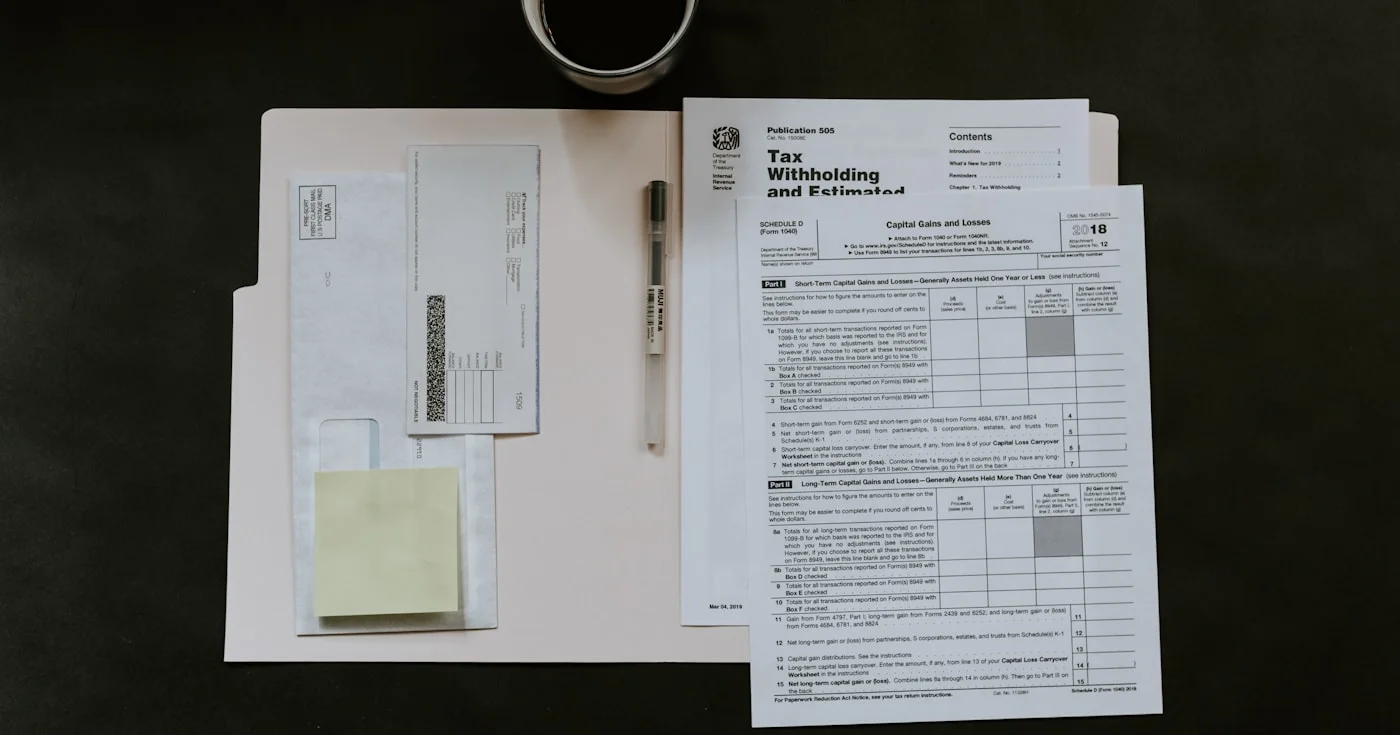
Day-30 deadline | 26 USC §83(b)(2): not later than 30 days after transfer | 15 May 2026 |
Form | Form 15620 (April 2025), file by mail | PDF printed; IRS instructions say submit by mail |
Copy to company | Required | Yes, with the RSPA file |
This row is a calendar reminder. It is not tax-prep. Cooley states the 30-day clock cannot be cured.
Field | Description | Example |
|---|---|---|
Who drafts the RSPA | Named firm or formation product | Stripe Atlas / Cooley forms |
Side letter amendable? | Must be amendable at financing or a leaver can block the round | No extra founder SHA; RSPA only |
Not legal advice | Both founders initial | Initialed 3 Mar 2026 |
Want to skip the copy-paste? Grab the Google Sheets version and start filling it in.
Maya Chen and Jordan Park are forming Northline, a B2B analytics company, as a Delaware C-corp. Six weeks in, no stock has been issued.
They reject 50/50 after reading Orrick's deadlock line. Maya is the CEO and the only initial director.
She takes 4,080,000 shares (51% of the 8 million founder block). Jordan takes 3,920,000 (49%).
One million shares sit in the option pool. One million stay unissued.
Both buy at $0.00001. Jordan's check is $39.20.
Reverse vesting is 0% up front, four years, one-year cliff, monthly, double-trigger, repurchase at cost. If Jordan leaves at month 10, Northline writes a $39.20 check and he keeps nothing. If he leaves the day after the cliff, he keeps 980,000 shares.
Jordan assigns the ETL repo on a CSPA schedule the day stock is issued. Both sign the same PIIA.
Maya puts 15 May 2026 on a shared calendar for Form 15620. They take the filled worksheet to Atlas rather than downloading a "founders agreement" PDF.
NVCA model documents (voting, IRA, ROFR-co-sale) replace founder side letters at the financing. They are not this worksheet.
Tool | Best For | Pricing | Free Plan |
|---|---|---|---|
Practitioner explainers and Delaware formation docs | Free | Yes | |
DE C-corp plus state fees and first-year registered agent; Cooley-authored forms | $500 one-time, then $100/year for the registered agent | No | |
Diligence-ready DE C-corp and post-incorporation setup | See Clerky | No | |
Cap table after stock is issued; split data, not legal rules | See Carta | No |
Clerky announced it is joining Stripe (26 Aug 2026). The post does not disclose terms. Do not assume Atlas and Clerky are already the same product.
Using Atlas does not create an attorney-client relationship with Cooley.
A registered agent is the in-state person or company who accepts lawsuits and official state mail. DIY is legal in most states; year-2 fees run from $50.

Five Product Hunt alternatives stacked by founder job: daily, weekly, waitlist, month-long, SEO. Live Sep 2026 pricing, cadence, and link policy compared.

A free LLC operating agreement template covering all 10 sections. Fill in your details and have an attorney review before signing.
