
Fill a Business Model Canvas Template From the Customer Side
Copy this business model canvas template in Google Sheets. Fill all 9 blocks customer-first, with a hypothetical example and official Strategyzer credit.
Updated 9 min read
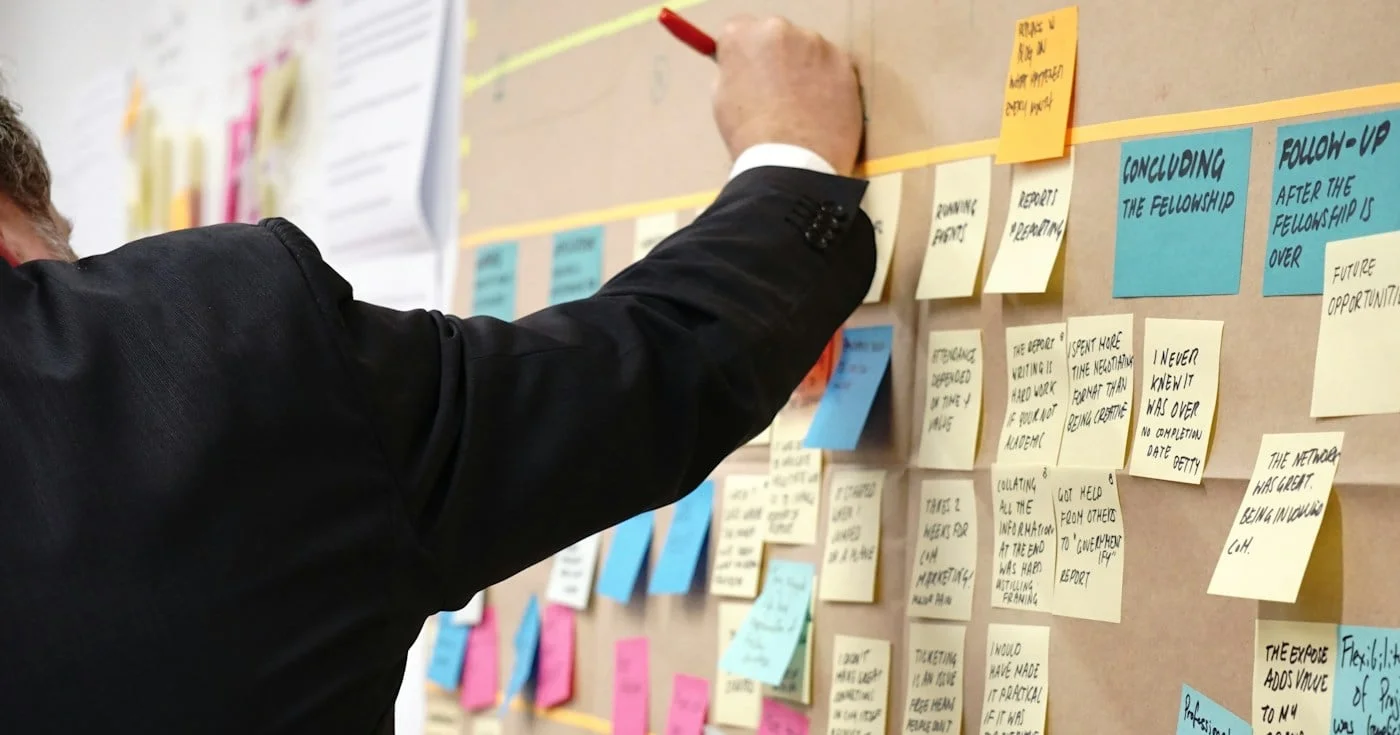

Copy this business model canvas template in Google Sheets. Fill all 9 blocks customer-first, with a hypothetical example and official Strategyzer credit.
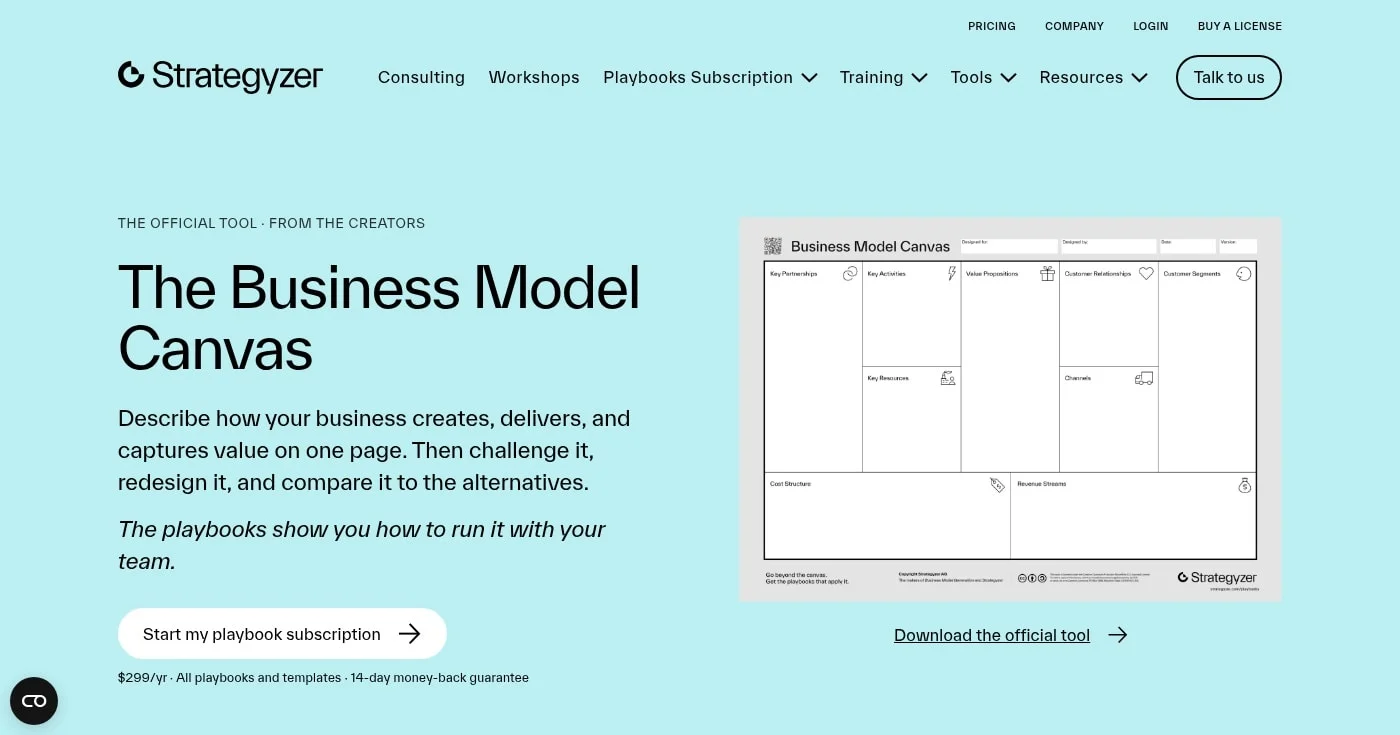
The Business Model Canvas is a one-page tool from Alexander Osterwalder and Yves Pigneur, published in the 2010 book Business Model Generation. It maps how one business model creates, delivers, and captures value across nine blocks: Customer Segments, Value Propositions, Channels, Customer Relationships, Revenue Streams, Key Resources, Key Activities, Key Partners, and Cost Structure.
This business model canvas template gives you a Google Sheet you can copy, a field for every block, and a hypothetical walkthrough. For the longer explainer, use the You Startups Business Model Canvas guide.
A product pitch with a revenue guess attached is not a model. The canvas puts customers, value, channels, relationships, money, activities, resources, partners, and costs on one page, so gaps show up before a long plan hides them.
Strategyzer puts the market on the right, the infrastructure on the left, and the value proposition in the middle. Move a customer segment and the channels, activities, and costs have to move with it. That is why a blank poster often is not enough: you need fields that make each assumption visible.
Of private-sector establishments that opened in the year ended March 2021, 47.2% still existed in March 2026, according to Bureau of Labor Statistics Business Employment Dynamics Table 7. The figure measures establishments, not startups as a class. It is still a reminder to test who pays before you scale, the same discipline as bootstrapping a business.
Get the ready-to-use template in Google Sheets.
The official Business Model Canvas is Strategyzer.com. Anyone may use it for their own work, including variations, if that credit stays visible under the canvas.
See Strategyzer's usage terms. The official PDF is released under CC BY-SA 3.0.
This Sheet is a fill-in worksheet, not a replacement for the official wall poster. Use the PDF for sticky notes on a wall, and the Sheet when you want fields, an example tab, and a dated copy in Drive.
Fill it from the customer side first. Strategyzer's written instruction manual says you can start on any block.
Osterwalder's short explainer still opens with customer segments. For a first pass, start there, then write the value proposition, then the rest of the right side, then infrastructure and costs.
Who is this model for? Name each distinct group of people or organizations you serve. Strategyzer is explicit: fill one canvas for one business model, not for the whole company.
Field | Description | Example |
|---|---|---|
Segment name | A short label for this group | Busy urban professionals |
Demographics | Age, location, income, role | 28-42, urban, $80K+ household income, full-time employed |
Behavior | How they act around this problem | Orders food delivery 3+ times per week |
Job to be done | What they are trying to accomplish | Eat healthy meals without cooking or planning |
Segment type | Mass market, niche, segmented, diversified, or multi-sided | Niche market |
Add one row per segment. Start with two or three primary segments before expanding.
The center of the canvas. What specific value do you deliver to each Customer Segment? Every other block should connect back to this.
Field | Description | Example |
|---|---|---|
Problem solved | What pain or frustration you remove | Eliminates meal planning, grocery shopping, and cooking time |
Job completed | What outcome the customer achieves | A healthy home-cooked meal with no planning effort |
Differentiator | Why this beats the alternatives they already use | Pre-portioned ingredients with step-by-step recipe cards |
Value type | Novelty, convenience, price, risk reduction, or other | Convenience and health |
Proof you will test | The evidence you still need, not a slogan | First-box completion rate and 90-day paid retention |
How does the value proposition reach each segment, from discovery to after-sales?
Field | Description | Example |
|---|---|---|
Awareness | How customers discover you | Instagram ads, creator reviews |
Evaluation | How they assess the offer | 50% off first box trial |
Purchase | Where and how they buy | Direct website, iOS and Android app |
Delivery | How the product reaches them | Weekly home delivery via a regional logistics partner |
After-sales | How you support them after purchase | In-app chat, pause and cancel controls |
How do you acquire, retain, and grow each segment? The relationship type changes your cost structure and how far the model can scale.
Field | Description | Example |
|---|---|---|
Relationship type | Personal, self-service, automated, community, or co-creation | Automated recommendations in the app |
Acquisition method | How you get new customers | Paid social ads, referral program |
Retention mechanism | How you keep them | Weekly meal customization, pause option |
Upsell path | How you grow revenue per customer | Upgrade to a chef-selected plan |
How does each segment pay? Every stream should trace back to a named segment.
Field | Description | Example |
|---|---|---|
Revenue stream | Name the stream | Weekly meal kit subscription |
Segment | Which customer segment pays | Busy urban professionals (primary), families (secondary) |
Revenue model | Subscription, usage, licensing, asset sale, or other | Subscription |
Pricing | Price point and the logic behind it | $12 per serving, 3 meals per week |
Payment timing | When cash arrives | Weekly auto-charge |
What must the business do to deliver the value proposition? List only the activities that would break the model if they stopped.
Field | Description | Example |
|---|---|---|
Activity | Name the activity | Ingredient sourcing and quality control |
Category | Production, problem-solving, or platform / network | Production |
Frequency | How often it runs | Weekly |
Owner | Team or partner responsible | Head of supply chain |
Which assets are indispensable? Strategyzer's explainer treats resources as the infrastructure that creates, delivers, and captures value, not as an inventory of everything you use.
Field | Description | Example |
|---|---|---|
Resource | Name the asset | Regional farm network (50+ partner farms) |
Type | Physical, intellectual, human, or financial | Physical |
Own or partner? | Do you own it, or access it through a partner? | Partner |
Criticality | What breaks if this disappears? | Missed deliveries, stockouts |
Which outside organizations does the model depend on? List only partners whose absence would break delivery.
Field | Description | Example |
|---|---|---|
Partner name | Who they are | Regional cold-chain logistics provider |
Role | What they provide | Last-mile delivery, cold storage |
Motivation for partnership | Why they work with you | Volume contract, exclusive geographic rights |
Risk if partner fails | What breaks | Missed deliveries, customer churn |
What does it cost to operate this model? Cost structure only holds if the blocks above it are right.
Field | Description | Example |
|---|---|---|
Cost item | What you are paying for | Ingredient sourcing |
Type | Fixed, variable, or semi-variable | Variable (scales with order volume) |
Estimated monthly amount | Your best number or range | $85,000/mo at 2,000 weekly subscribers |
Optimization lever | How you might reduce this later | Volume discounts at 5,000+ subscribers |
Want to skip the copy-paste? Use the Google Sheets version and start filling it in.
Business Model Canvas is Strategyzer.com.
The walkthrough below is hypothetical. FreshBox is a made-up meal kit company, used so you can see every block filled, not a real business with verified ratings or retention.
Startup: FreshBox (meal kit delivery for urban professionals)
Block | Content |
|---|---|
Customer Segments | Busy urban professionals (28-42), health-conscious families |
Value Propositions | Chef-designed, pre-portioned ingredients delivered weekly, with no planning or grocery run |
Channels | Instagram ads (awareness), 50% off first box (evaluation), app and website (purchase and delivery) |
Customer Relationships | Automated in-app recommendations, email reminders, referral rewards |
Revenue Streams | Weekly subscription at $12/serving: 3-meal plan at $72/week |
Key Activities | Ingredient sourcing, recipe development, order fulfillment, app maintenance |
Key Resources | Regional farm partnerships, cold-chain logistics, culinary team, mobile app |
Key Partners | Regional farms, cold-chain logistics provider |
Cost Structure | Ingredients (variable), logistics (variable), technology (fixed), marketing (variable) |
In this story, the team assumed students would pay, then learned that urban professionals converted more often and rewrote the canvas. The habit is the point: write the assumption, test it, and date a new copy of the Sheet.
On founder forums, a recurring pattern is that a canvas goes stale once it is treated as a one-time poster. Strategyzer tells you to date and version it, then redraw it as evidence comes in.
Ash Maurya, who created the Lean Canvas, puts the one-page model before an MVP. Use that as sequencing, then talk to the people in block 1.
Tool | Best For | Pricing | Free Plan |
|---|---|---|---|
Official BMC PDF and playbooks | Playbooks from $299/yr | Yes (official PDF) | |
Live workshop boards for distributed teams | From $8/member/mo, billed yearly | Yes (3 editable boards) | |
A lightweight shared canvas | Startup $25/yr | Yes (50 notes) | |
Diagramming teams already in Lucid | Individual from $9/mo, billed annually | Yes (3 documents) | |
Spreadsheet-style team templates | Pro from $9/member/mo, billed yearly | No (30-day trial) |
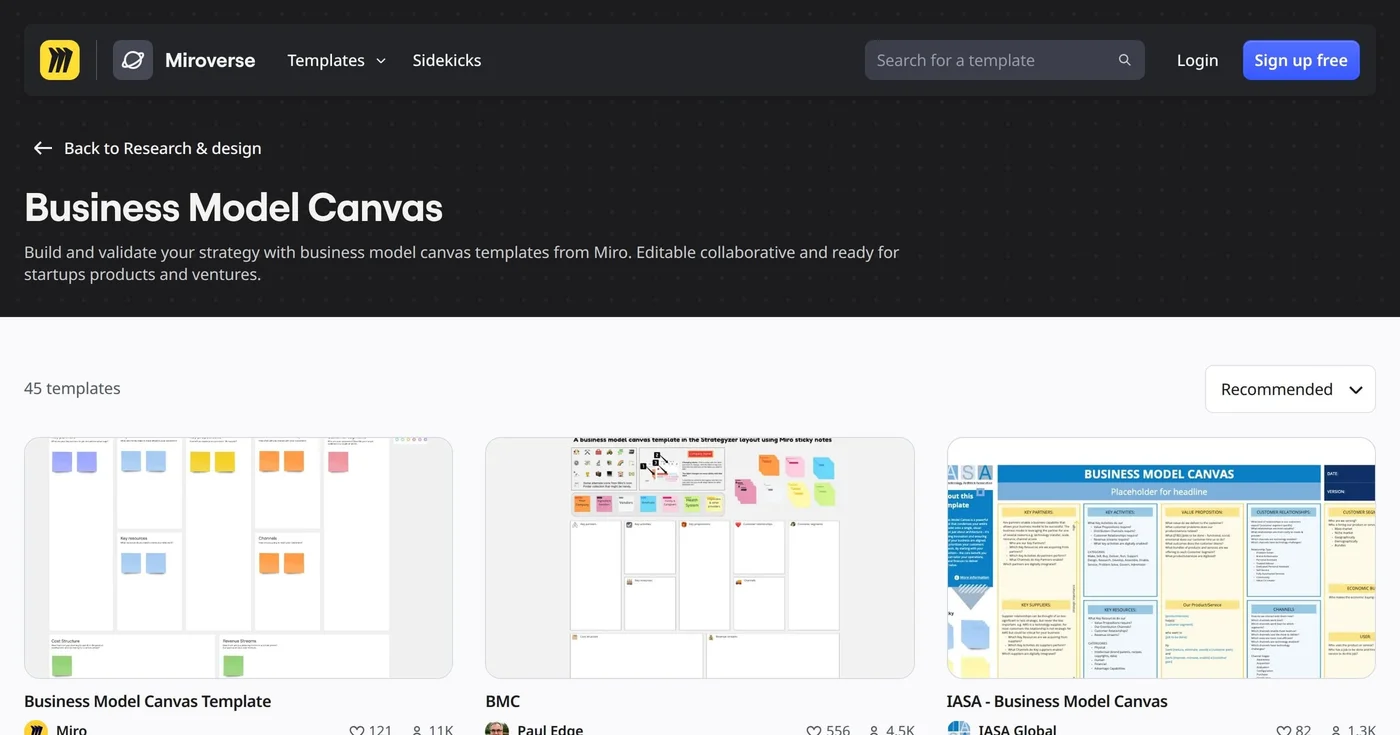
Prices were checked on the vendors' public pricing pages on 26 November 2026, Europe/Madrid. Smartsheet Pro is $12/member/mo when billed monthly.
No team, no idea yet? 12 European programs, builder houses, communities and events for solo founders, with 2026 terms, equity, cities and who gets in.

Startup accelerators in Europe for teams with an MVP or revenue: Techstars, Seedcamp, EIC, Startup Wise Guys, Slush and 7 more, with 2026 terms and deadlines.
VC buys minority stakes in young startups; PE buys control of mature companies. Compare stage, ownership, leverage, exits, fees, and returns.

